
Walt Mundkowsky was born 1944 in San Antonio, TX. As a teenager, he had a dachshund named after Hugo Wolf. Extensive writings on film (cf. his “Cinema Obscura” column in Home Theater, 1995-2001). He favors the mine-shaft approach to music listening — in-depth exploration of tiny, unrelated areas. A resident of Beverly Hills, he has lived in basements in Denver, London and Stockholm, and may very well do so again.
Walt Mundkowsky
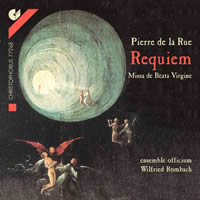
A Requiem Done Right
A new recording of Pierre de la Rue’s Requiem is for me an event.
July 9, 2005
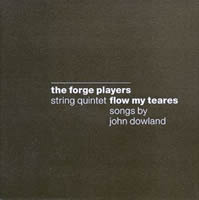
Walt’s Ratatouille 8.
This 1998 CD (available here as Elektra / Asylum 22109) takes a wilder swing at updating John Dowland than ECM’s subsequent In Darkness Let Me Dwell would, so its “fixes” are more fun for the Dowland admirer.
February 9, 2005
Walt’s Ratatouille 8.
This 1998 CD (available here as Elektra / Asylum 22109) takes a wilder swing at updating John Dowland than ECM’s subsequent In Darkness Let Me Dwell would, so its “fixes” are more fun for the Dowland admirer.
February 9, 2005

Walt’s Ratatouille 7.
Hard on the instrument and on the players, Beethoven’s piano-four hands transcription of his Grosse Fuge is also hard to find.
December 30, 2004
Walt’s Ratatouille 7.
Hard on the instrument and on the players, Beethoven’s piano-four hands transcription of his Grosse Fuge is also hard to find.
December 30, 2004
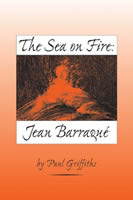
No Longer and Not Yet
Some of us have hobbyhorses; French serialist Jean Barraqué (1928-1973) is one of mine.
September 8, 2004
No Longer and Not Yet
Some of us have hobbyhorses; French serialist Jean Barraqué (1928-1973) is one of mine.
September 8, 2004
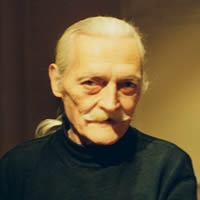
La Folia Lost a Dear Companion
W.A. Grieve-Smith, 1928-2004.
July 4, 2004

Einstürzende Neubauten’s Die Hamletmaschine
Noise rockers Einstürzende Neubauten got the chance to record Die Hamletmaschine for East German radio in 1990.
June 4, 2004
Einstürzende Neubauten’s Die Hamletmaschine
Noise rockers Einstürzende Neubauten got the chance to record Die Hamletmaschine for East German radio in 1990.
June 4, 2004
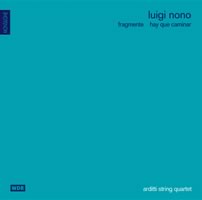
Nono at the Close: “Hay que caminar„ soñando
“Caminantes, no hay caminos, hay que caminar.” — Travelers, there are no roads, but we must go on.
December 5, 2003
Nono at the Close: “Hay que caminar„ soñando
“Caminantes, no hay caminos, hay que caminar.” — Travelers, there are no roads, but we must go on.
December 5, 2003
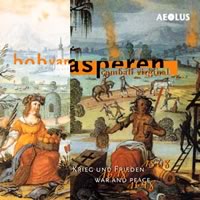
Four Centuries Apart 1.
Bob van Asperen stood out in Gustav Leonhardt’s first wave of gifted pupils (Alan Curtis and Ton Koopman among them).
February 20, 2003
Four Centuries Apart 1.
Bob van Asperen stood out in Gustav Leonhardt’s first wave of gifted pupils (Alan Curtis and Ton Koopman among them).
February 20, 2003
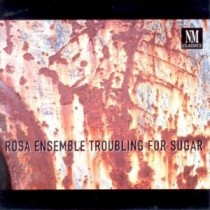
Walt’s Ratatouille 6.
Utrecht’s Rosa Ensemble is another of the category-crossing bands that renders the New Music scene in Holland so vital.
July 1, 2002
Walt’s Ratatouille 6.
Utrecht’s Rosa Ensemble is another of the category-crossing bands that renders the New Music scene in Holland so vital.
July 1, 2002

Walt’s Ratatouille 5.
The opening cut, Bley’s solo rendition of “Touching,” distills the pianist’s art — pedaling that turns notes into sculpture, leaping figures suddenly dropped, looming spaces.
April 1, 2002
Walt’s Ratatouille 5.
The opening cut, Bley’s solo rendition of “Touching,” distills the pianist’s art — pedaling that turns notes into sculpture, leaping figures suddenly dropped, looming spaces.
April 1, 2002

Walt’s Ratatouille 4.
Cole’s highlights package hasn’t been assembled with great care, but it does lend an old fan the excuse to spill some opinions.
August 1, 2001
Walt’s Ratatouille 4.
Cole’s highlights package hasn’t been assembled with great care, but it does lend an old fan the excuse to spill some opinions.
August 1, 2001
Walt’s Ratatouille 3.
These records influenced the course my listening subsequently took. Their CD versions are new to me, and fifteen years have passed since I last lowered a stylus. Can one look back without disappointment?
April 1, 2001
Walt’s Ratatouille 3.
These records influenced the course my listening subsequently took. Their CD versions are new to me, and fifteen years have passed since I last lowered a stylus. Can one look back without disappointment?
April 1, 2001